ANGLO-SAXON DIGITAL HUMANITIES
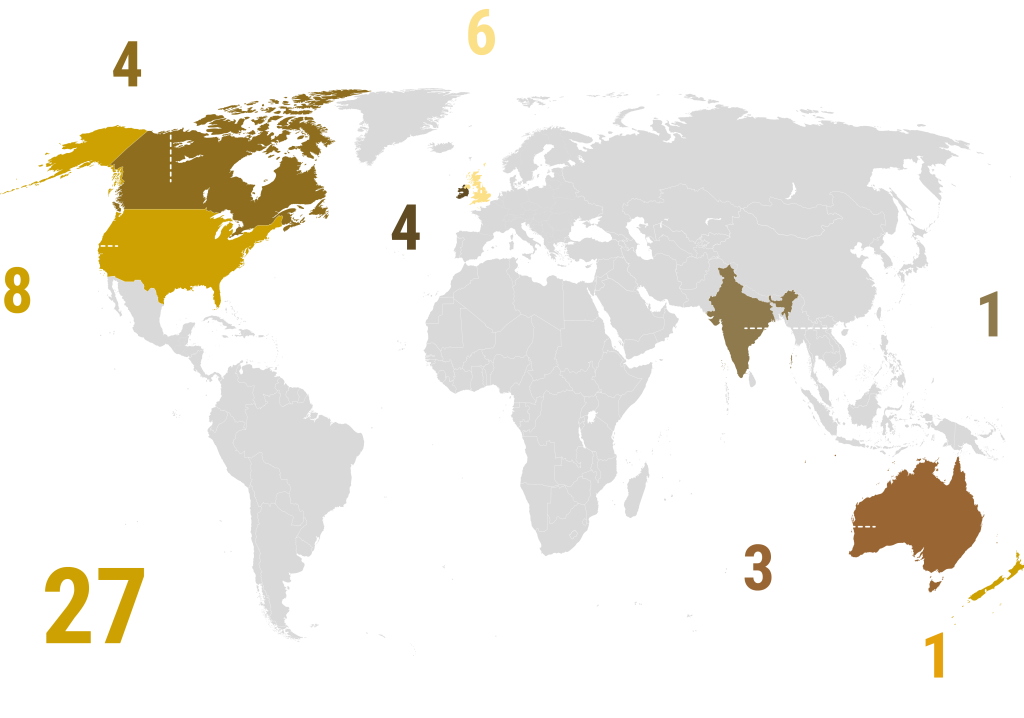
An in-depth analysis of the curricula proposed by the 27 universities allows us to sketch the contours of a specifically Anglo-Saxon Digital Humanities competency framework. Structured around 7 meta-competencies
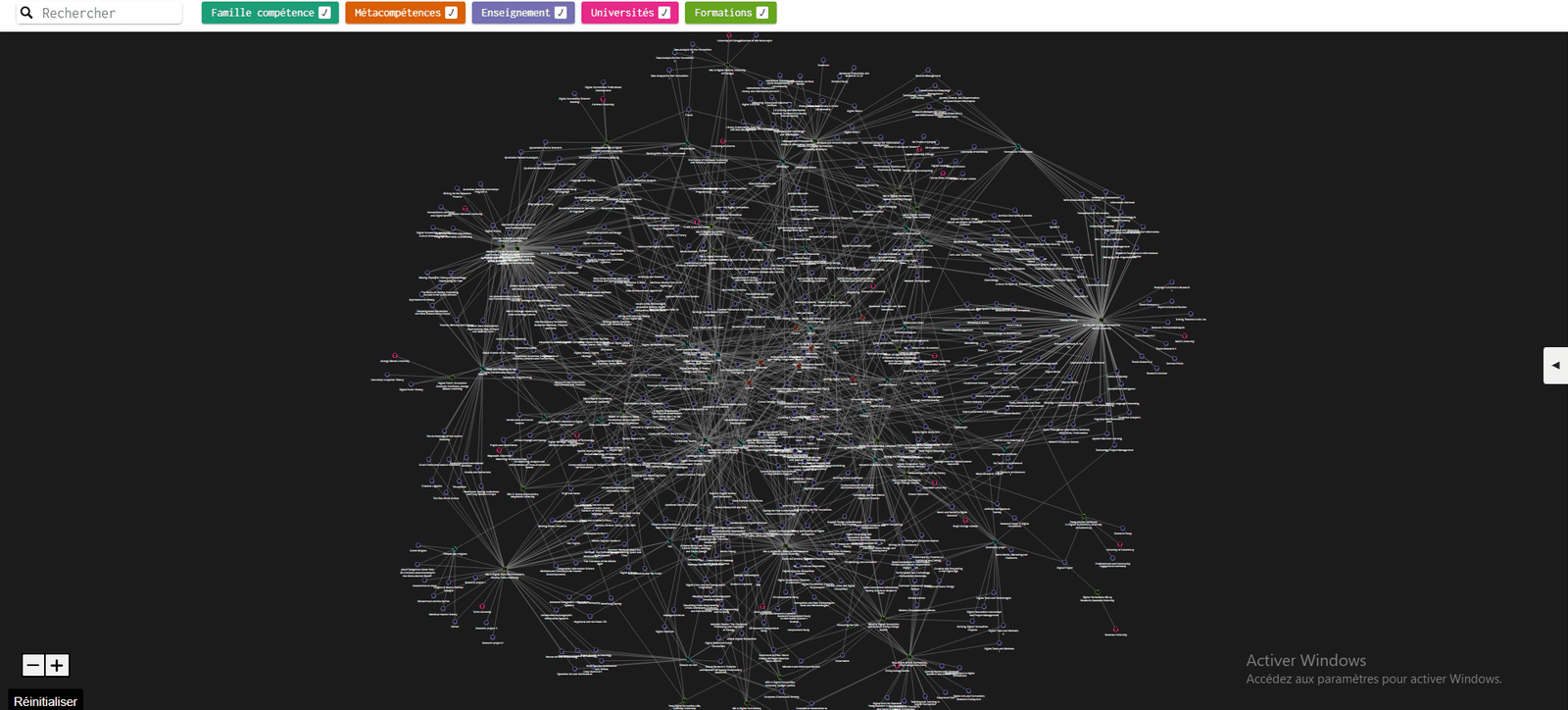
The result of several months of reflection by MICA researchers, the White Paper on Digital Humanities in the Anglo-Saxon world has enabled students in the Master 2 DNHD program to develop a map of the competencies offered by universities in the United States, the United Kingdom, Ireland, Canada, India, New Zealand and Australia. During 4 months and with the help of a multitude of tools, the students have searched, processed and analyzed the data that allow them to present you this overview of the project, via various detailed visual representations.
SKILLS IN MOTION
The competencies are the main data for our work on the Digital Humanities in the Anglo-Saxon world, they allow us to understand and show the learning axes taught. The analysis of the competences was carried out on the teachings of the Anglo-Saxon Digital Humanities Masters.
To facilitate the analysis we have set up 7 meta-competences, which correspond to the main ones, then we went into detail by creating families of competences, of which there are 29.
As you read on, you will find these 7 meta-competencies, so it is important to understand how they work.
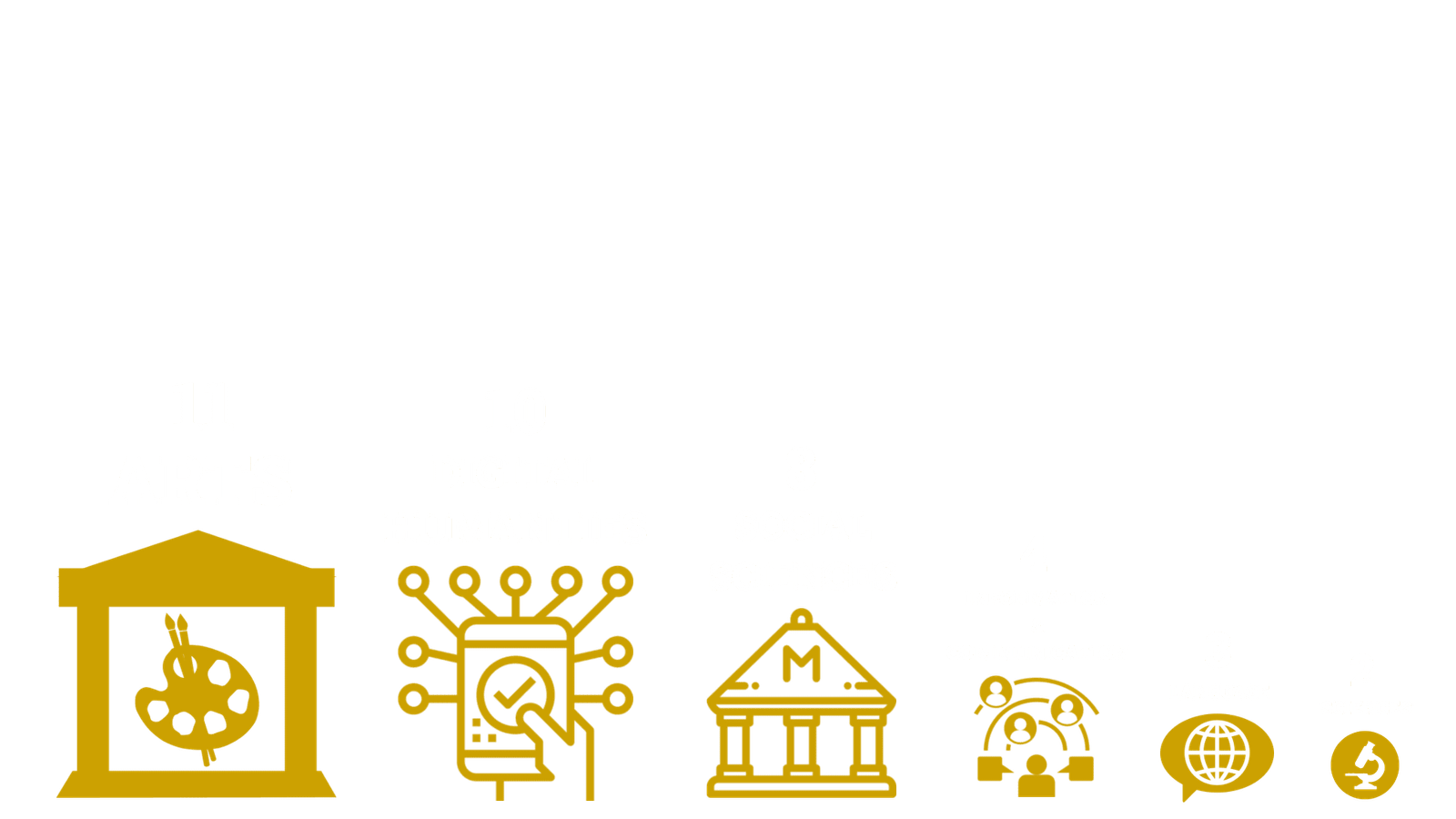
By hovering over the pictograms the definition of
the meta-skills is displayed

DATA

RESEARCH

TOOLS

METHODOLOGY

EDITORIAL

CULTURE

CORPUS
NAVIGATION IN ANGLO-SAXON SKILLS
DIGITAL HUMANITIES VOCABULARY IN OCCURRENCES
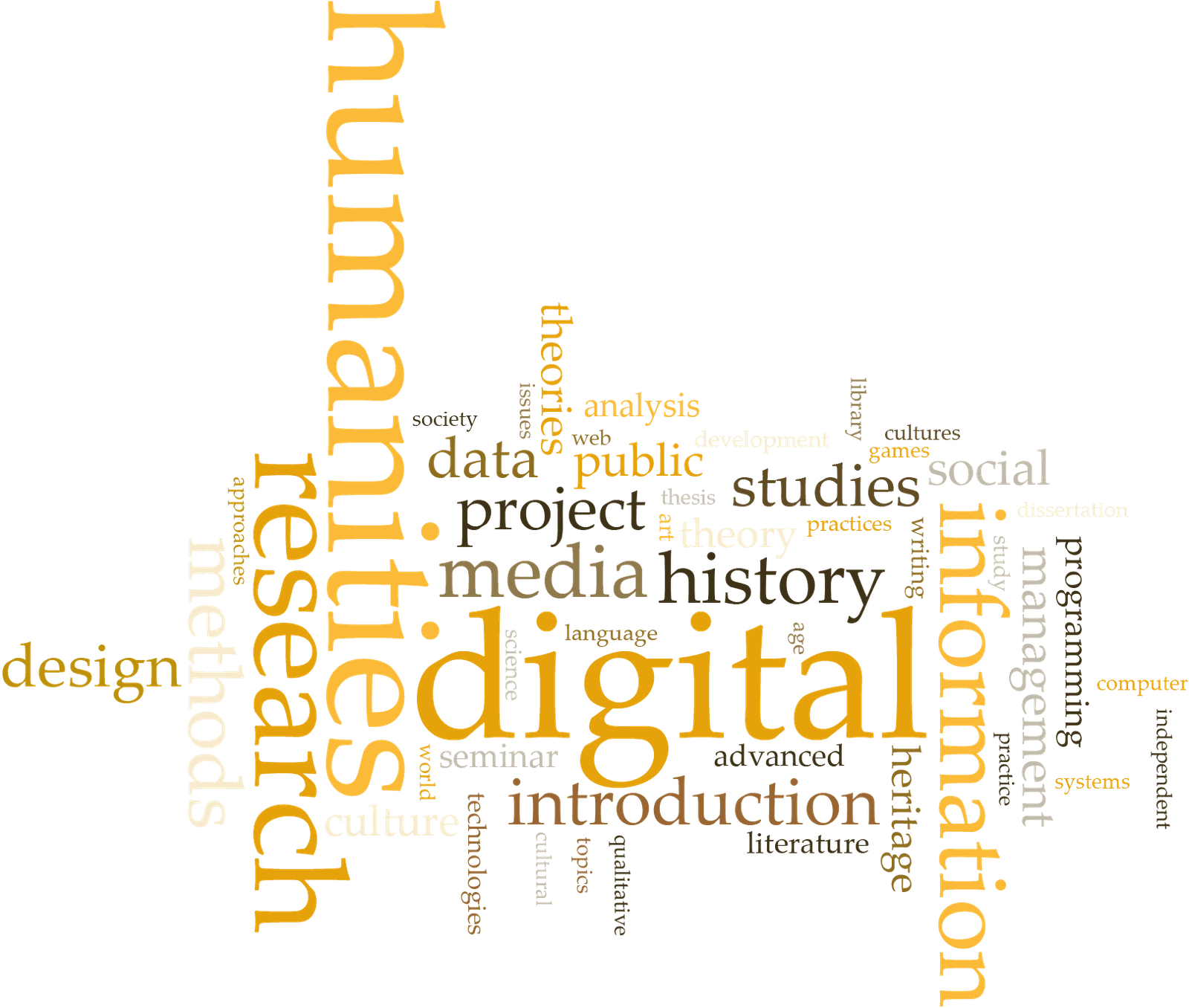
In addition to the mapping of competences, it is interesting to look at the frequency of occurrence of the words that make up the lessons recorded during the data recovery. This makes it possible to clearly display the most recurrent teaching axes in the Anglo-Saxon world of Digital Humanities.
The analysis was carried out with the digital text analysis tool Voyant tools, where we entered the titles of the 600 lessons. Subsequently, our sample was represented as a word cloud.
EDUCATION HORIZON
Our target was Master’s level courses in the Anglo-Saxon world, with a focus on Digital Humanities. Using the data collected, and after cleaning up to keep only the necessary information, we were able to list the different courses in order to compare them and carry out a mapping of skills.
DIRECTORY OF COURSES
Specialisation of courses
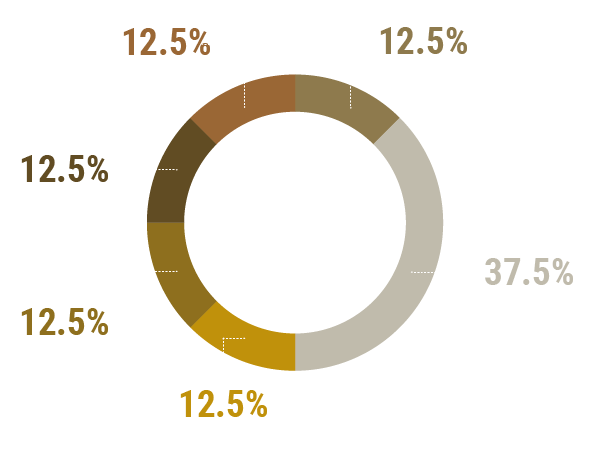
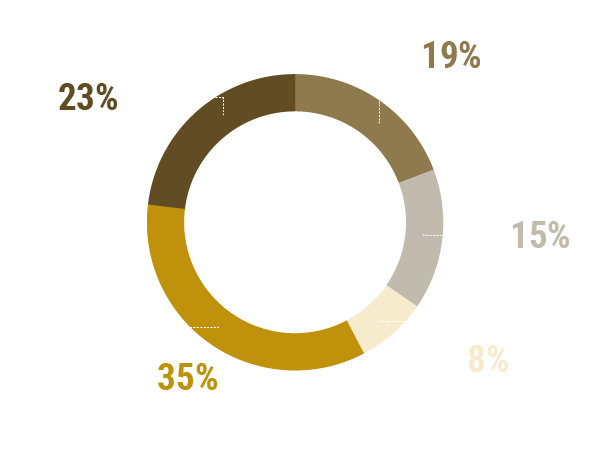
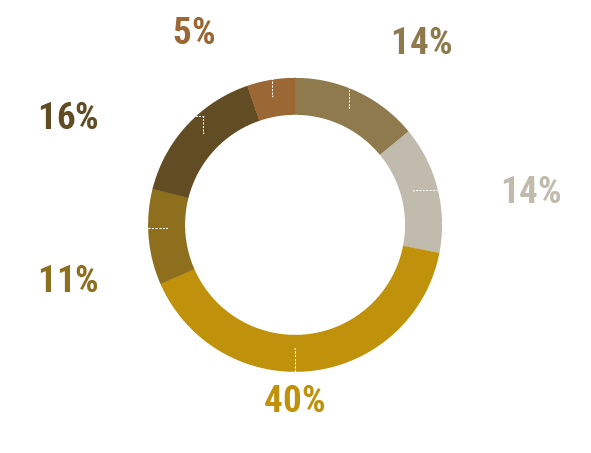
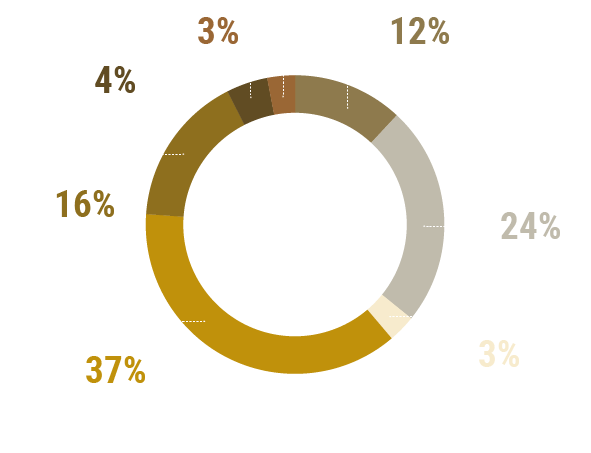
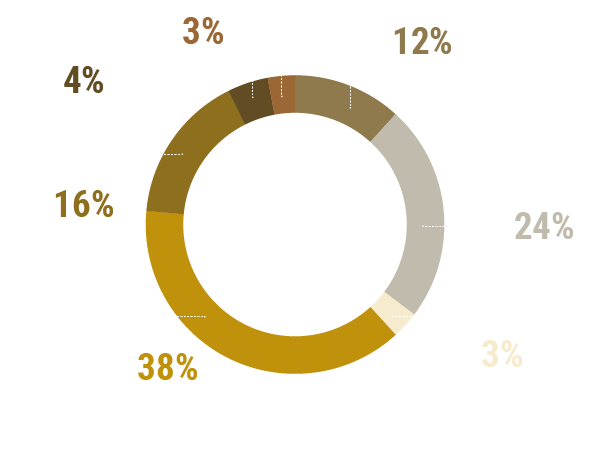
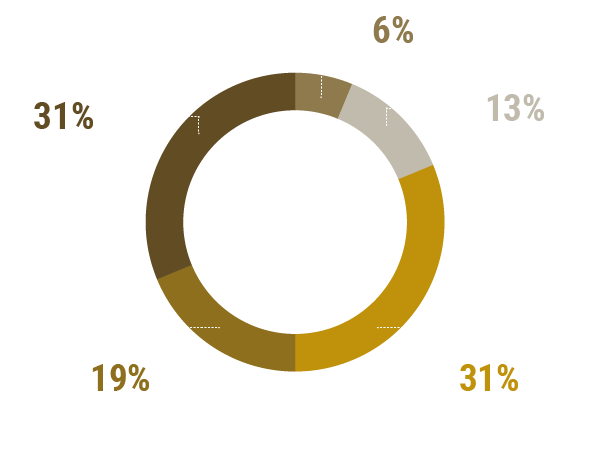
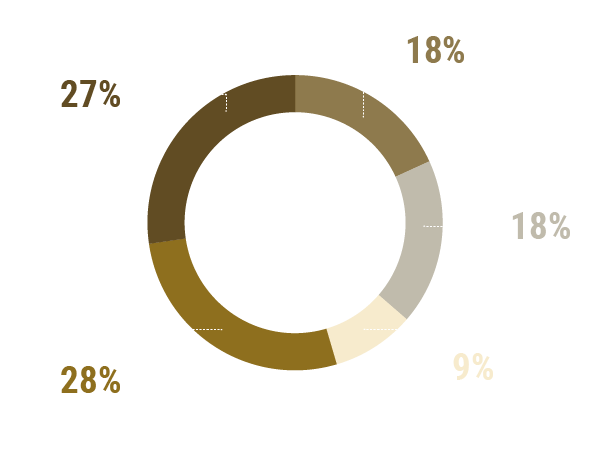
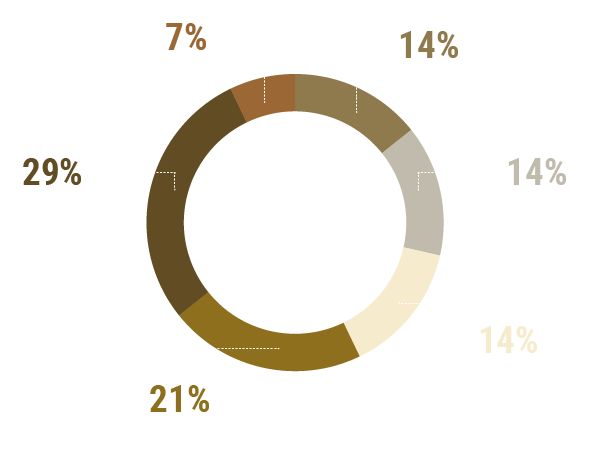
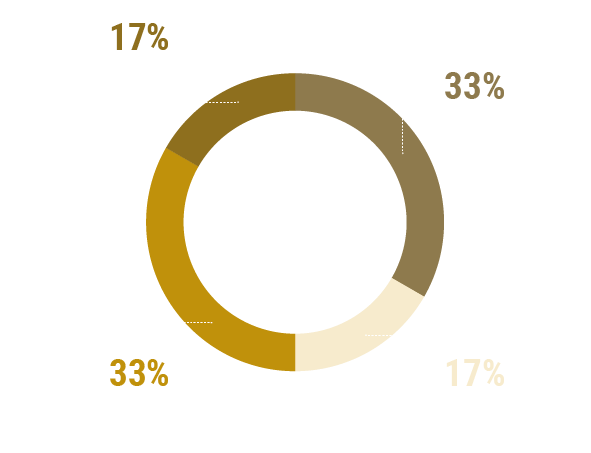
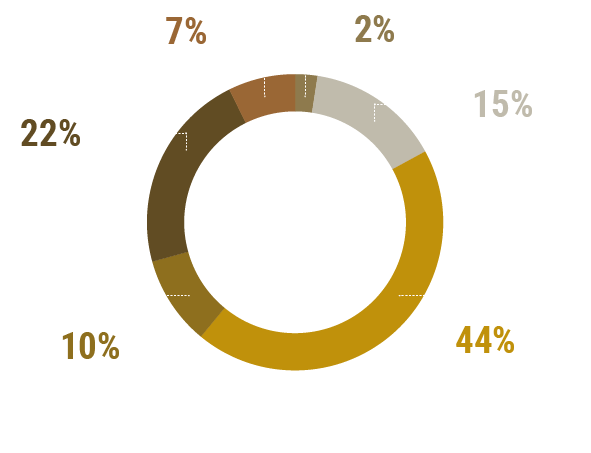
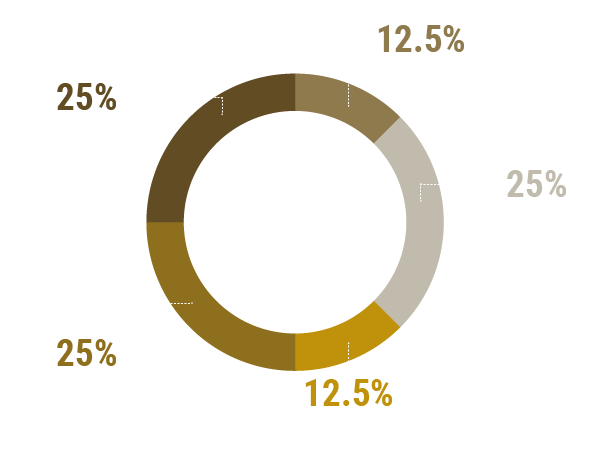
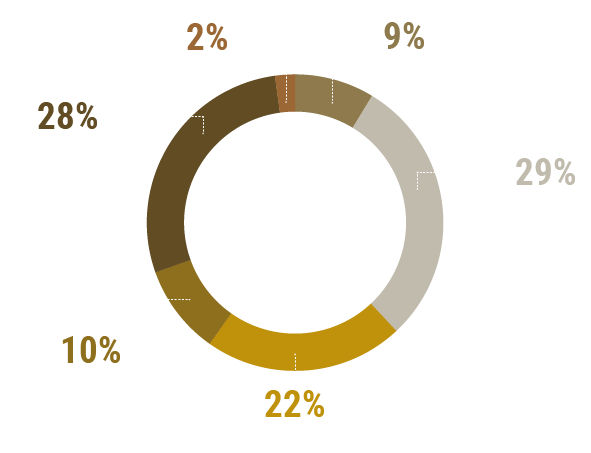
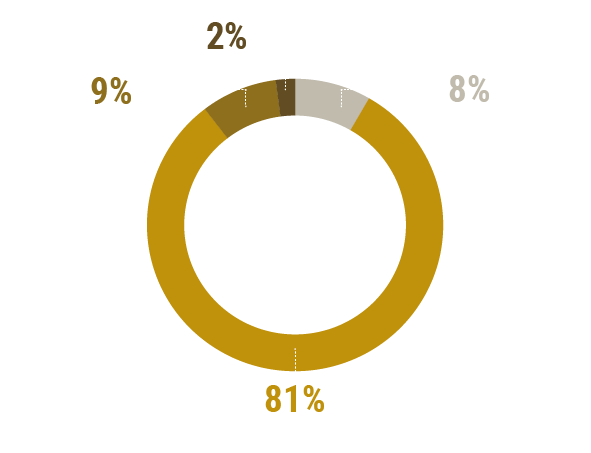
For a better understanding of the teaching offers of the Anglo-Saxon Masters, we have classified the different subjects taught in 7 well-defined axes, also called meta-competences.
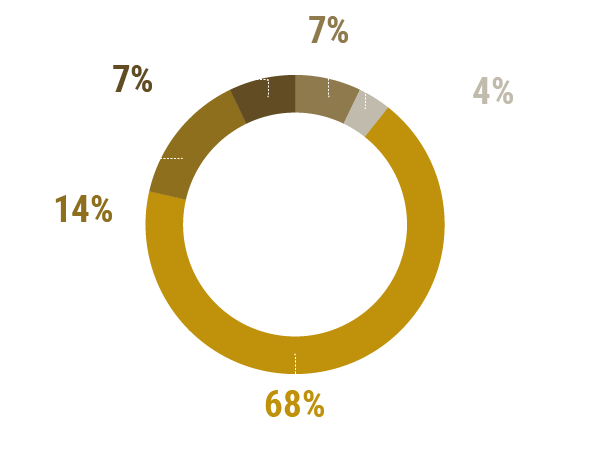
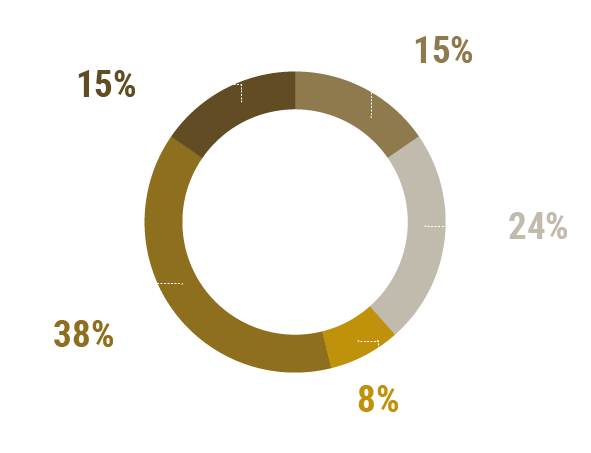
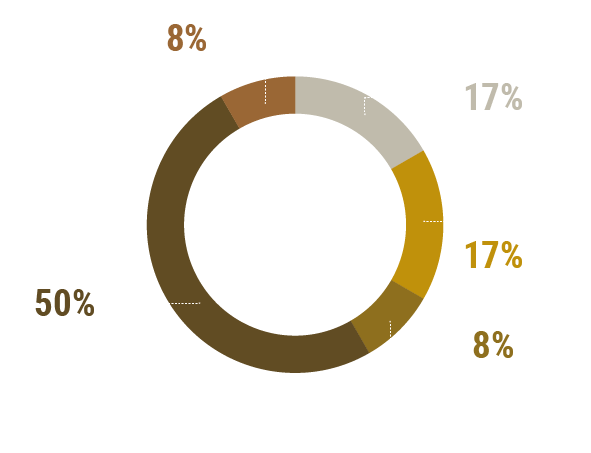
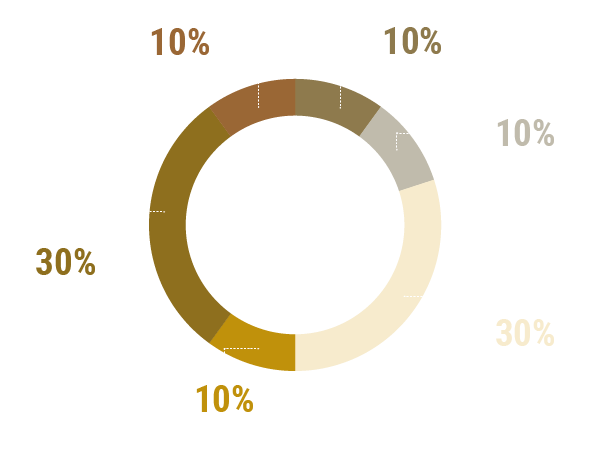
The infographic here models the percentage of these axes on the totality of the courses. We can see that a large part of the teaching is focused on the culture related to the digital or more global humanities.
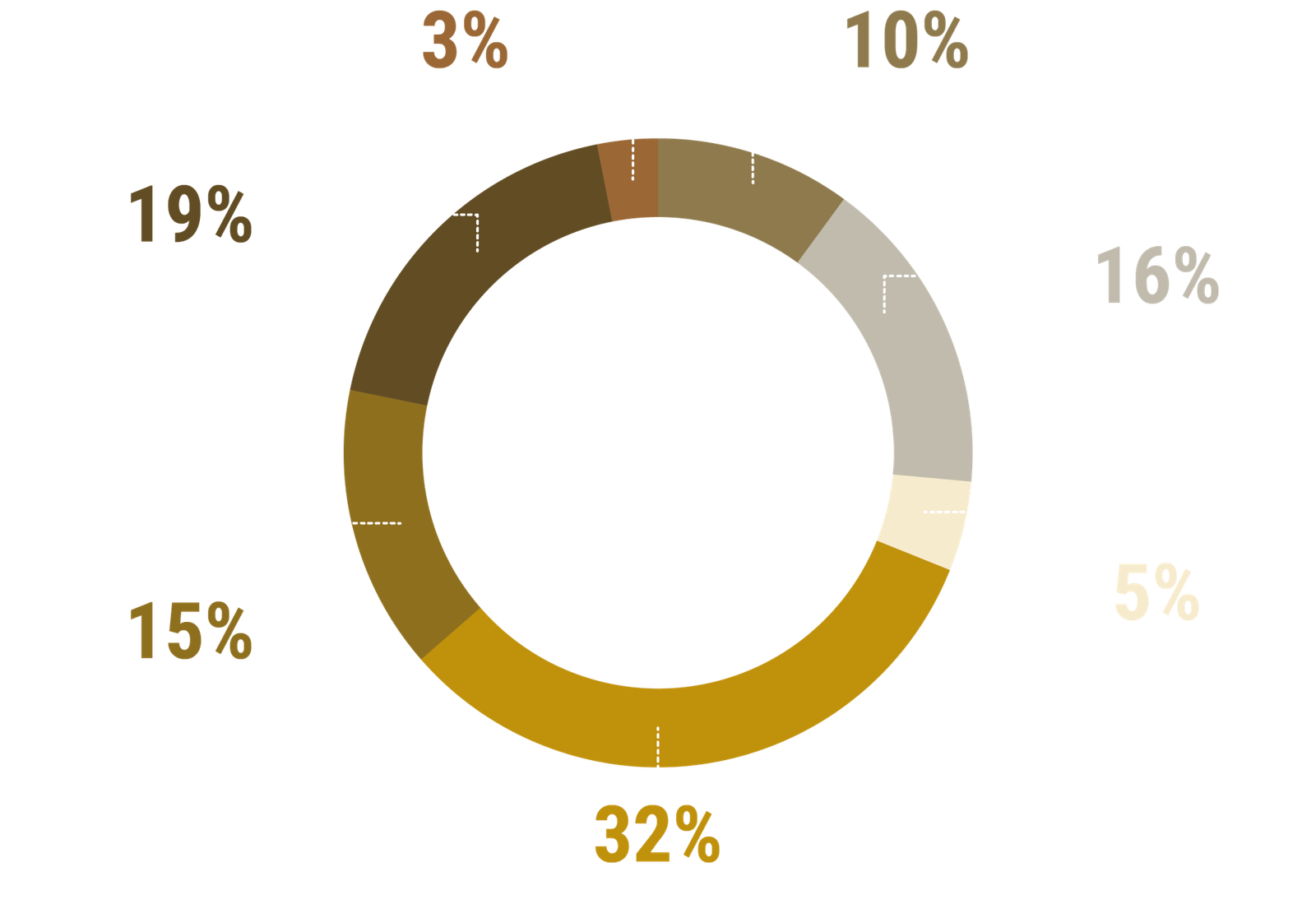
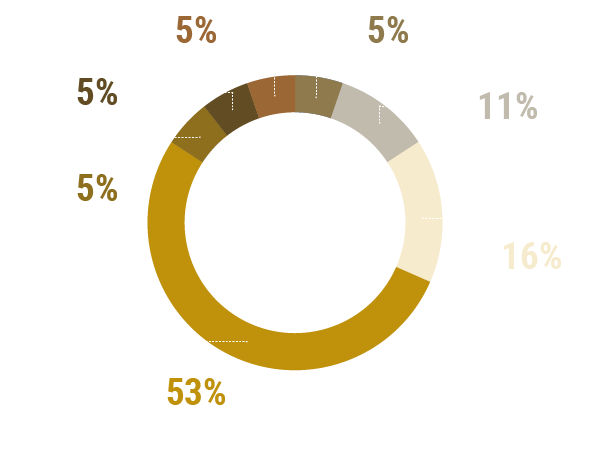
Comparison of the teaching areas of the Anglo-Saxon courses
Distribution of courses in the academic world
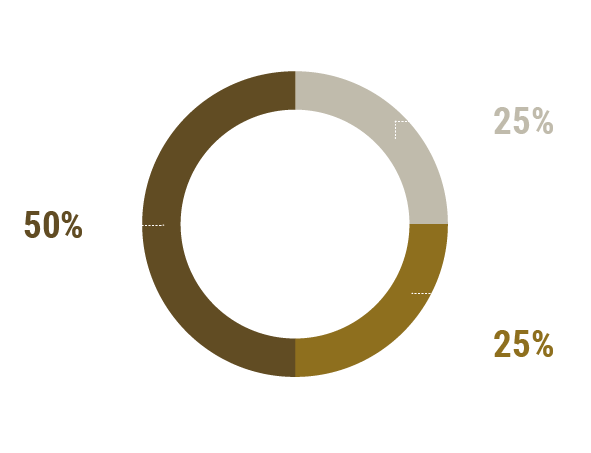
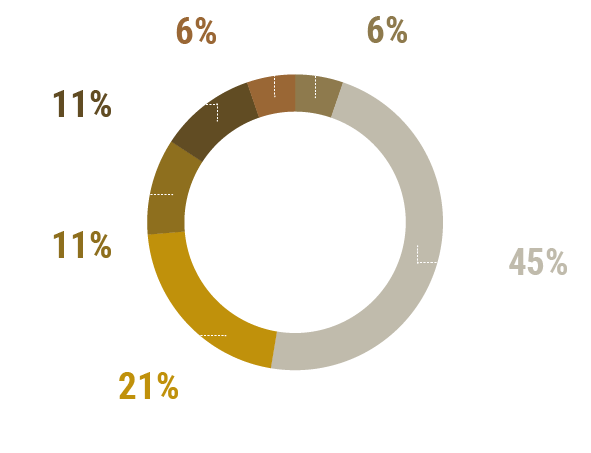
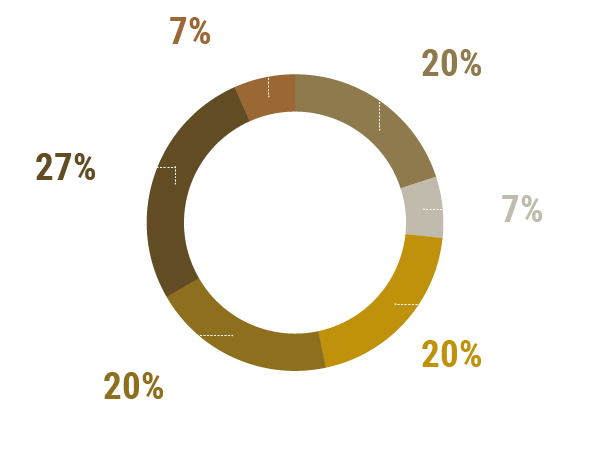
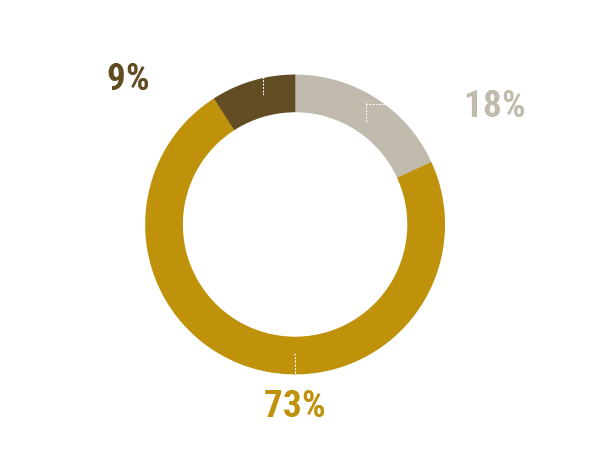
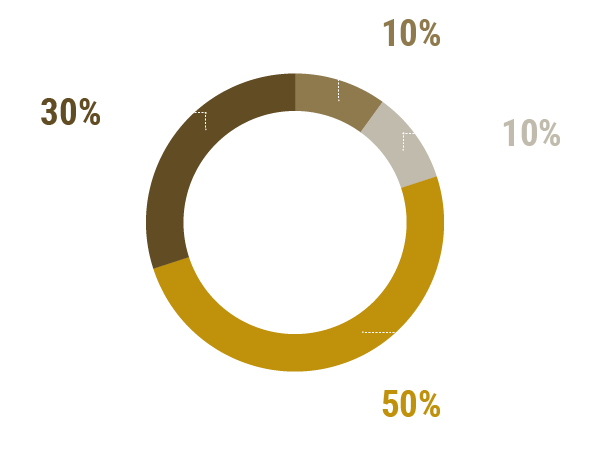
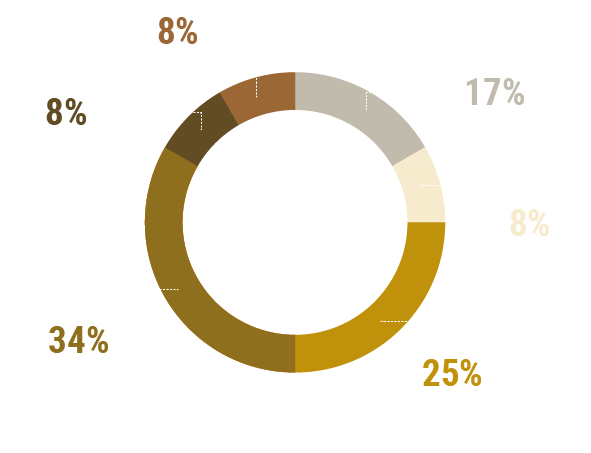
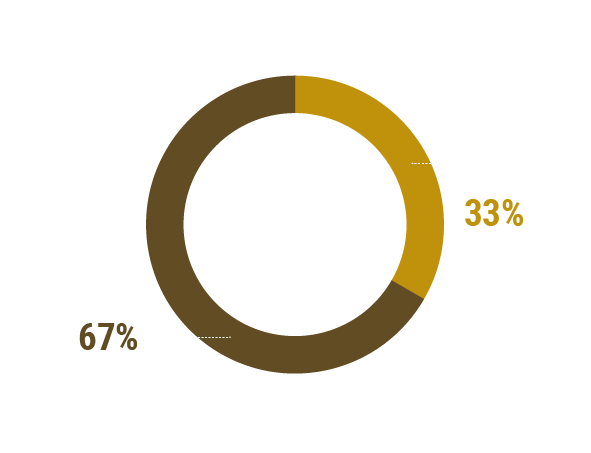
In the course of retrieving and processing the data, we noticed a noticeable difference in the way the Anglo-Saxon world views the Digital Humanities. To see this we set up an overview of the distribution of Digital Humanities courses across university departments.
We discover a field of 6 different departments, going from art, to social sciences, then ending with sciences.
Web notoriety
The world of Digital Humanities is in direct relation with the computer world and therefore, the web. The web notoriety of universities offering training in this field is logically an interesting criterion to present. To quantify this notoriety, we have based ourselves on 3 criteria for the classification of sites on the web, such as : the Alexa Rank, the MozRank and the Sem Rush Rank. The ranking is based on the Google search engine.
We can see that North American universities occupy a large place on the web, with a good visibility compared to other courses. The visualisation is done with the interactive data visualisation tool Tableau Public.
Methods
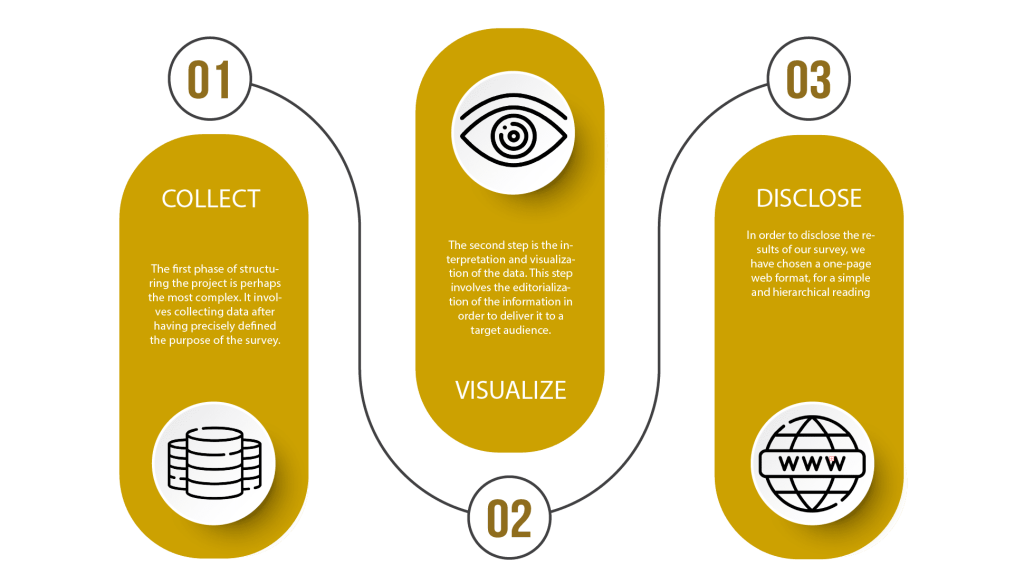
This project, and consequently its working methodology, was divided into two stages, a first part with all the Master students and a second part in a smaller group.
In the first part, we sought to obtain the most relevant database possible. We reworked the topic, its approach and the database with the teachers, using various tools. We also established our first ideas for the final visual of the website, as well as learned other tools to develop our skills in several areas such as: webdesign, data processing, data visualisation, etc. The writing of the textual contents was also done with all the students, so that our realisations would be coherent despite the possible graphic differences.
Then, we split into groups to create two websites, each with its own visual identity and its own choice of tools, as well as a working methodology specific to the team, but whose contents remain the same.
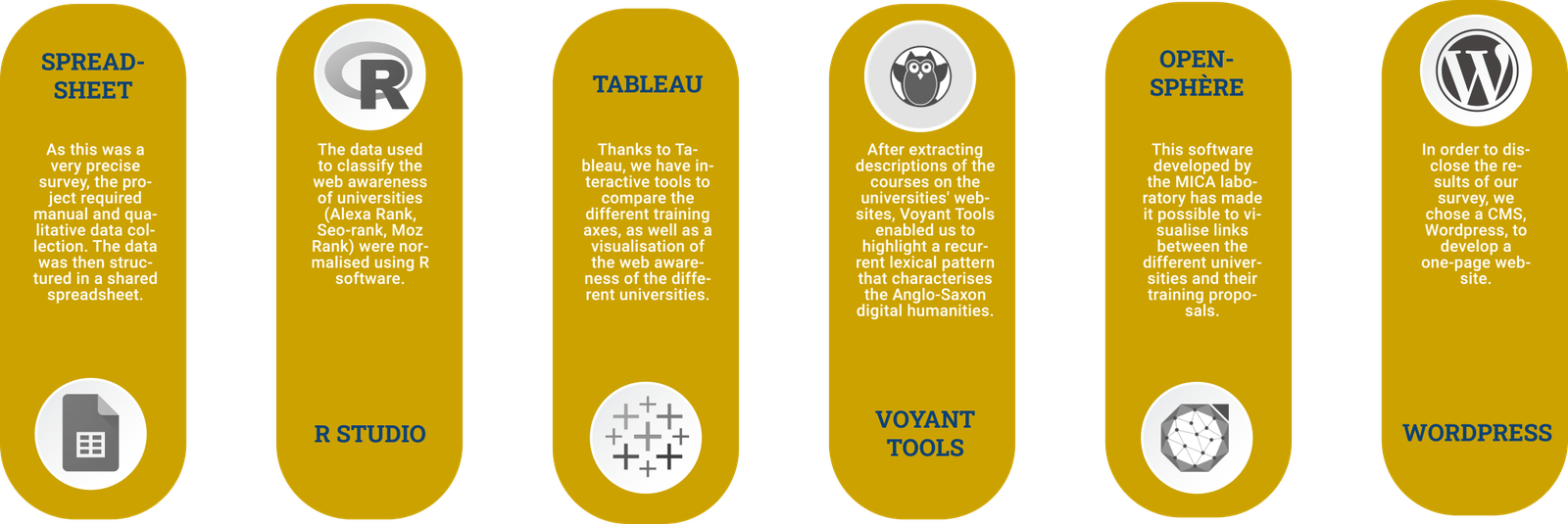
Tools & Body of Data
We used a variety of tools during the course of this project to make the most of our database. Firstly, the first version of this database was built on a Google Spreadsheet shared between all students. For the processing of specific aspects, R was used, as well as Prepost SEO and SEO Rank, respectively to obtain the Alexa and Moz Rank. Finally, AirTable and Opensphere were used to create the DHsphere. The infographic below allows you to see the different tools (common to all and specific to our group) that we used to accomplish this project.
Our project being rather specific on a very precise domain, the corpus of data that we have recovered remains important enough to have a complete and global view of the Anglo-Saxon world of Digital Humanities. The aim of this project is to establish a complete outline of the Anglo-Saxon world, which is very different from the French offers, by proposing a large number of courses, for students to choose from.
We are making this body of data available to you, which may, moreover, evolve and grow in the future in order to refresh the current information from this project.
Team & Partners
This project was carried out by the students of the class of 2020/2021 of the Master 2 Digital Document and Digital Humanities of Bordeaux Montaigne University, in collaboration with the teacher-researchers of the MICA laboratory and the Institute of Information and Communication Sciences (ISIC).








 Concordia University
 USA, Ann Arbor
 English
 Research Paper : Oui
 19 524 €
 Georgia Kreiger
 internship : Non